
Cremation is the most popular choice in New Zealand these days, with burial no longer the default option for our loved ones. But lots of people don’t really know how cremation works or what options there might be. We’ve gathered some common questions and answers below.
We always speak respectfully about the deceased we look after, but please be aware that some of the descriptions below are quite practical and use fairly blunt terms, in order to be as accurate and clear as we can be.
Do you have a cremator?
It can be very useful for a funeral home to have a crematorium on-site, but we don’t have the space. A cremator is a large piece of industrial machinery and it needs resource consent, consultation with neighbours, a lot of Health and Safety, and extra expertise and hours to operate.
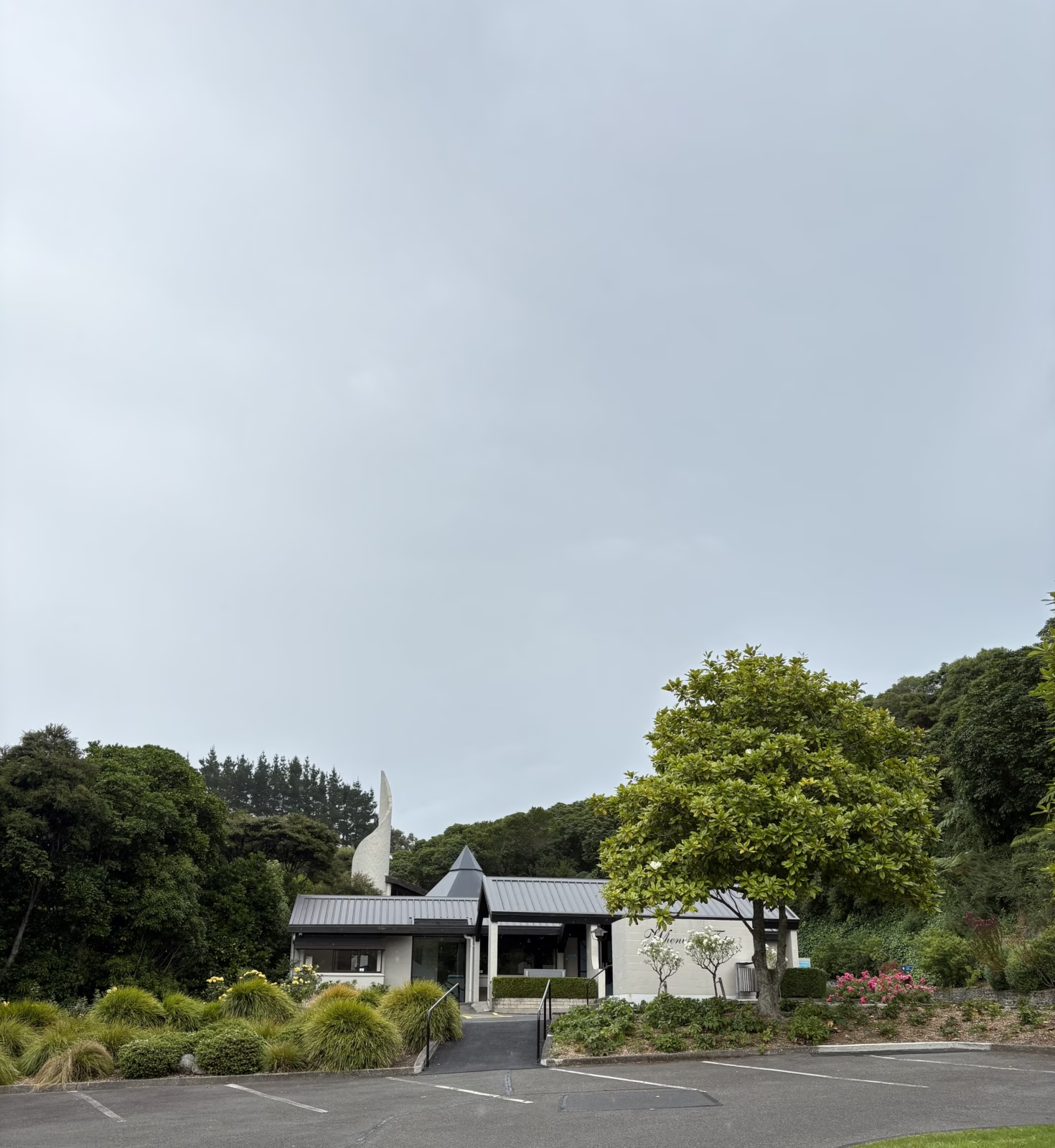
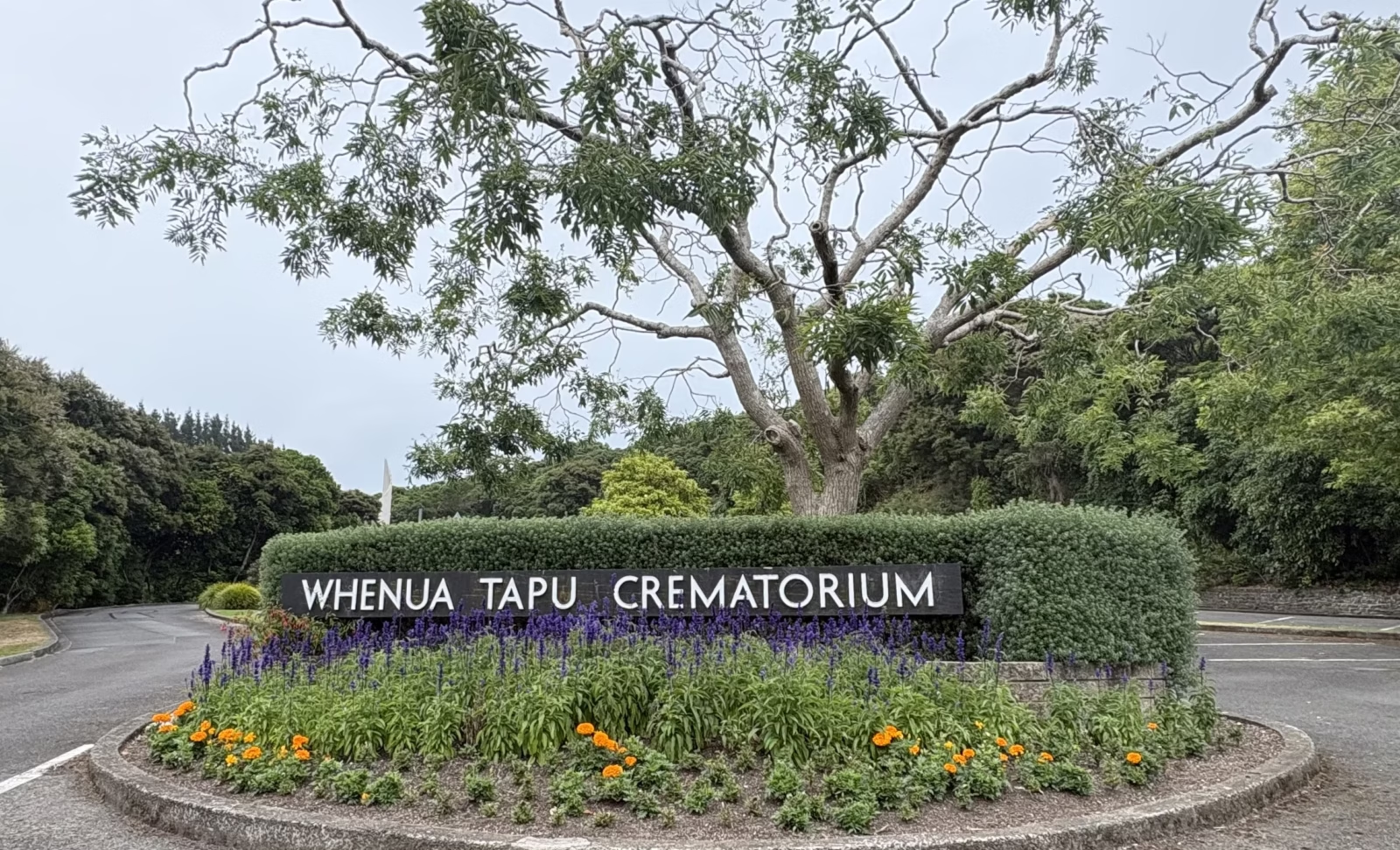
The crematoria which have in the past been operated by other funeral homes in Wellington city are no longer operational. There’s a crematorium in Karori Cemetery which is operated by Wellington City Council and another at Whenua Tapu Cemetery which is operated by Porirua City Council. Akatarawa Crematorium (in Upper Hutt) is owned and operated by InvoCare, the corporation that owns several funeral home brands across Wellington. Each facility has their own booking systems and pricing – we can talk you through what’s available.
What is a committal and do we have to have one?
The time used to say a final goodbye to a loved one at the crematorium is called the ”committal”. Each crematorium has a chapel (Karori has two: the Main Chapel and the Small Chapel). Chapels can be booked in 30 minute blocks. Some families have their entire funeral service in the crematorium chapel, while others hold the service elsewhere and invite only the immediate family and very close friends to attend the committal afterwards.
For some families, it’s important to stay together at the end of the funeral service, so “committal” happens at the hearse after the funeral service, after which Mary or Stu drive the deceased to the crematorium and commit them to the care of the crem staff.
For other families there isn’t much more to be said but they do want to be there the whole way. In this case we can book what’s called a “delivery with family present” – family can gather at the back of the hearse for a few minutes before the crematorium staff take the deceased inside.
Sometimes, for personal reasons or because of booking availability, we book the crematorium for a day or two after the funeral service. Other times, family want to have a cremation with a small family gathering first, and the full funeral (aka memorial) service afterwards.
When can we have a cremation?
Each crematorium has their own booking system. We’ll make contact with them and find out what slots are available. Whenua Tapu and Karori crematoria have bookings available on weekdays, with some special bookings on Saturdays and public holidays (at an additional cost). If we’re making a booking on a weekday during working hours we can usually get confirmation fairly quickly of what times are available, but if booking over the weekend or in the evening we have to wait until the next workday starts before knowing for sure if our booking is secure.
How does cremation actually work?
In cremation, the deceased is placed in a casket or on a shroud board – something with a solid base and with handles, to enable crem staff to move the deceased safely. The cremator is brought up to a high heat (about 800 up to about 1,150 degrees Centigrade) and then the casket is rolled inside. The high temperatures reduce the casket and the deceased to gases and some remaining ash and bone fragments.
The time it takes for this to happen depends on a few factors, including the size of the deceased and the time of day – later in the day there’s more heat built up in the machinery which means reaching the required temperatures doesn’t take as long as first thing in the morning.
There are two more steps in the process. Bone is the only material (apart from any surgical metal implants – see below) that partially survives the cremation process, and a cremulator is used to reduce those remaining fragments into a fine, sandy ash. The final part of the process is placing the ashes into an urn. Every crematorium will provide an urn as part of their service.
The time from committal to return of the ashes is usually a couple of working days. If you need your loved one’s ashes returned faster than this, we’ll speak to the crem staff. They can usually manage a return by 24 hours.
Is there smoke?
Cremation does produce smoke, but part of the cremator technology is double-burning, which means the smoke is also processed through high temperatures and is vented as a little steam. Looking at the roof of the crematorium, you may see heat waves, but rarely smoke. If there is smoke, the cemetery staff will be on the phone to us to ask pointed questions about what could have caused this.
What’s the big deal about smoke?
A few things. Primarily, the neighbours don’t like it. Also, there are resource consent rules about generating smoke and if a crematorium can’t prevent smoke then they may be shut down.
If I’m in the chapel… what will I see?
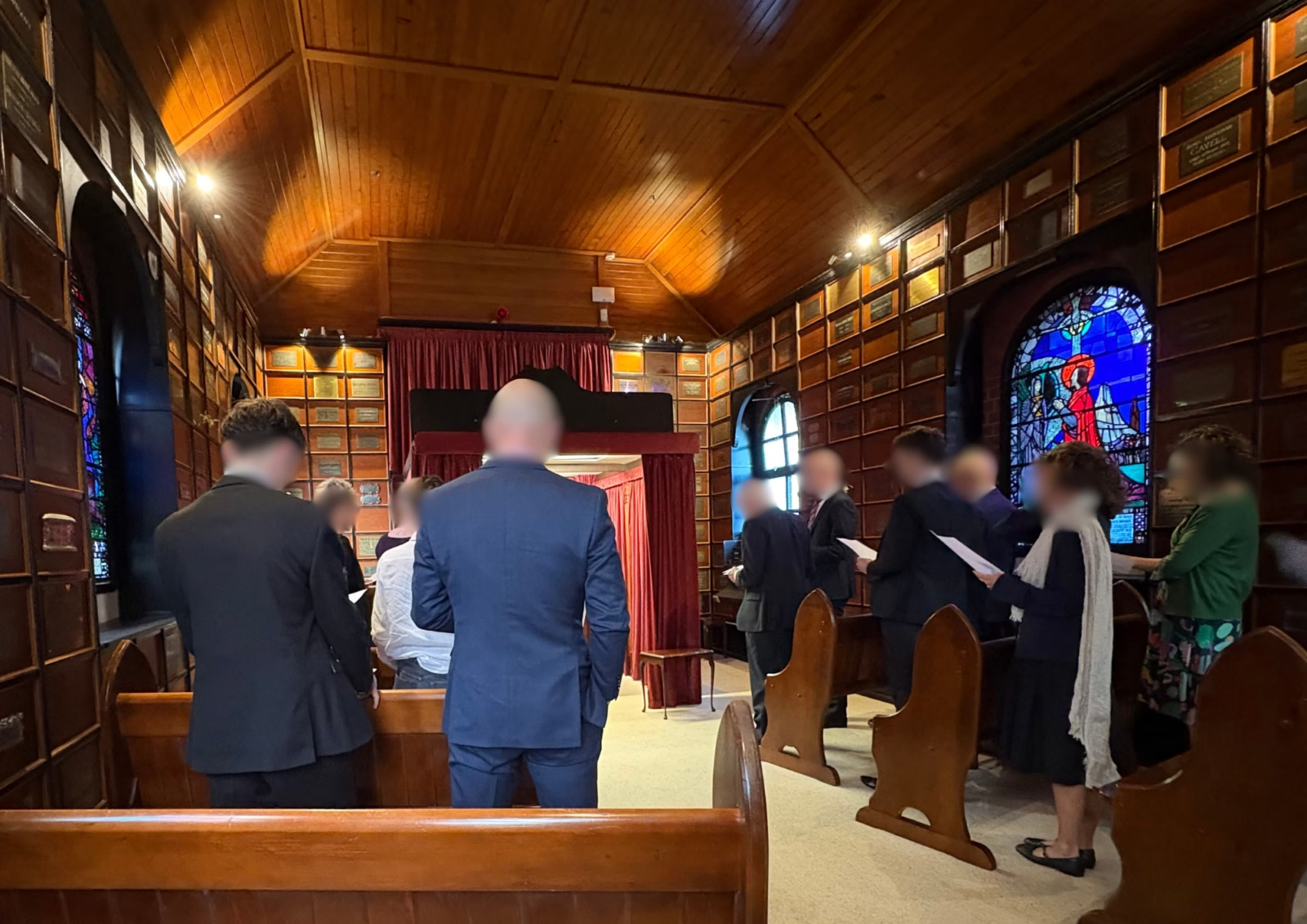
Crematorium chapels are designed to be quiet, peaceful places. There’s usually a plinth or space up the front where the casket will be placed (either by pallbearers or by us). There’s often a curtain behind the casket which conceals the entrance to the cremator room. When the committal is complete and it’s time for the deceased to move to the next step in the process, you have a choice: you can choose to leave while your loved one rests in the chapel, or you can choose to stay in the chapel and watch them go through. That will either involve a door opening and the casket being wheeled out, or the curtain opening and the casket being rolled through a hatch. You won’t see anything beyond the chapel unless you’re really trying to peep through the door or hatch, and even then you would see an industrial-looking room with a machine inside it. But usually all you’ll see is the crem staff calmly taking your loved one into their care for the next step in the journey.
If I witness the cremation… what will I see?
This is a different scenario from a chapel committal, and needs to be arranged with the cemetery office when we make the cremation booking. Because a cremator is heavy machinery there are health and safety issues with having members of the public in the room while it’s being operated, so we will need to book extra time for a witnessed cremation. Sometimes we’ll be required to take the first or last booking of the day, to allow extra time for the technicians to do their work.
A witnessed cremation isn’t for everyone. When it does occur it’s usually part of a religious ceremony, which means most of those present will have had experience of it before. We’ll discuss the details in the arrangement meeting, but here’s what usually happens.
The family group will move (at the invitation of the crem staff, once they’ve made everything ready) into the cremator room. There will be an ongoing, loud mechanical noise, which is the cremator. It sounds a bit like the noise you’d hear from an airoplane on the tarmac. The cremator room will be plain and fairly empty, apart from the cremator machine. The machine is rectangular, made of concrete and metal, about the size of a high-sided van, and has room inside it for one casket. When it’s time for the cremation to happen, a hatch at one end will be opened; inside you’ll see concrete (no flames). The casket will be rolled inside – this happens rapidly, as the temperatures need to be maintained so the door can’t be held open for long. Then the hatch is closed, and the crem technician will attend to monitoring the machine.
This part of a laying a loved one to rest can be quite confronting. If you wish to witness the cremation, we will be with you the whole time.
What happens to hip replacements and stuff like that?
Metal surgical implants may melt in the high temperatures of the cremator, but they won’t crumble or evaporate. These are usually lifted out after the cremation process, using a magnet. You can ask to have them be placed into the urn with the ashes, or they can be recycled. Depending on the type of metal and its condition, surgical implants might be recycled into road signs or motorway barriers. The likely destination for this metal would be determined by the crematorium; they’ll be happy to talk to you about their processes.
What can’t be cremated?
There are some things that can’t go with the deceased through the cremation process, as they are likely to damage the cremator machine. These include: a pacemaker (if the deceased has one, we will remove it for them), any glass larger than spectacles or a watch face, or anything with a battery. Another thing the crematorium staff will watch out for is unusual paint or varnish on the casket. (These can create smoke when cremated, which can lead to complaints from neighbours and could result in the crematorium losing its licence to operate.)
Direct cremation
Direct cremation is when cremation takes place without a service beforehand. This usually means that our team will transfer the deceased into our care, prepare them (wash, dress and place in a simple casket) and transport them for cremation once the paperwork is complete. We then return your loved one’s ashes and Death Certificate in due course.
Because there’s no funeral service and the cremation takes place at a time of our and the crematorium’s convenience (family don’t attend), we offer a discounted Direct Cremation “package”. Get the details on our Costs page.
Direct cremation may be the right choice for you, for any number of practical or emotional reasons. No matter what service we’re providing, your loved one is always treated with the greatest of respect and dignity when they’re in our care.
View other resources

How did you get to be a Funeral Director, Stu?
Becoming a funeral director was the beginning of what would

No shame; no regrets – Pride in our funerals
The Pride Festival is on in Wellington. No matter where

Glossary: some common funeral-related words and what they mean
Do you pin a cortège on your lapel? If you

Can I get a memorial bench in Wellington?
Installing a seat, bench or picnic table in a public

Are you open on Public Holidays?
One of us is always available on the phone, any

What is a celebrant? And who can be one?
The celebrant is the person who leads the funeral service.

Someone has died – what should I do?
The death of a loved one is overwhelming. We’ll guide

Do I have to have a funeral service?
Everyone’s situation is different, and everyone has a different idea

How Much Does a Funeral Cost?
“How much does a funeral cost” is one of the

What happens at a burial?
Cremation may be more common these days, but plenty of
Looking for some help? Get in touch
Enter your contact details here and we’ll be in touch as soon as we can. If someone has died, it’s best to call us: 04 399 1299.