
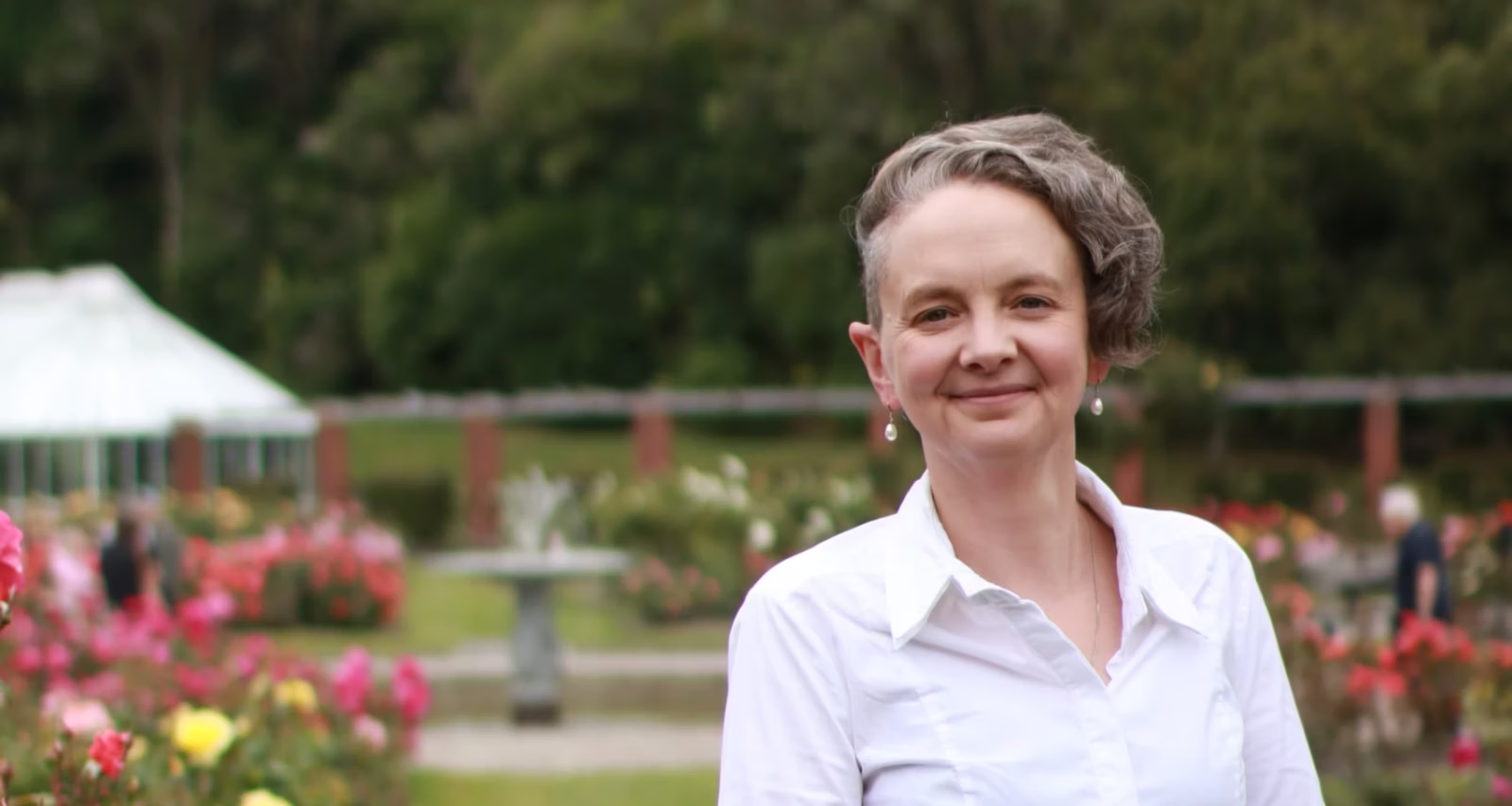
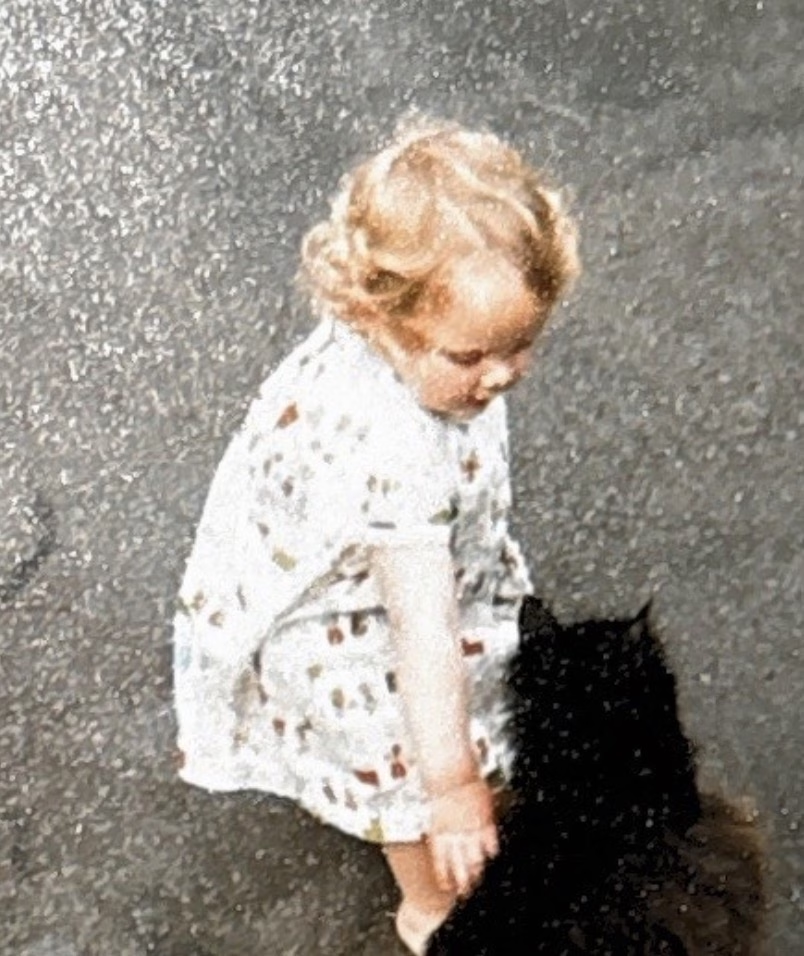
I’ve spent most of my life unsure of what I wanted to be when I grew up.
I grew up in Ōtepoti Dunedin, where I went straight from high school to a History degree at Otago and then on to an OE in Edinburgh. When I moved back from Scotland my Dad was nearing the end of his life, after living with cancer for a few years. I entered a holding pattern in Dunedin until Dad passed away at the (wonderful) Otago Community Hospice. During those years I did various short-lived contract jobs which were fine.
Moving to Wellington marked a distinct turn of the page for me. It was a new start – but of what, exactly, I wasn’t sure. I’d always been an English nerd and loved writing, so I followed my nose and found work in comms, first for NGOs and later Government departments. A decade-long career sort of happened to me. While it had plenty to recommend it, about the time COVID came along I knew I wasn’t satisfied any more. But what else could I do? I just didn’t know.

The million dollar question
I started asking everyone I met the same question: “Do you enjoy your job?”
A lot of people said they didn’t hate their job and that was enough for them. A few did hate their job. And there were some people who loved their job. The one who stands out most in my memory is my hairdresser (Muki, at The Hair Chair on Cuba Street). She said absolutely loves her job – can’t get enough of it. Why, I asked? “I make people feel better about themselves.”
That was the key: a job that was of use to other people. So what could I do well that would provide that sense of helping, making people feel better?
A confluence of factors
By coincidence, around the same time as this a friend introduced me to one of the pathologists at Wellington Hospital. She and I went for coffee together and nattered away for ages. She mentioned that there weren’t that many people she could sit and talk to about death, and had I considered working in that area?
Shortly after, a good friend lent me a book she thought I would like: Smoke Gets In Your Eyes by Caitlin Doughty. While this book reflects a very American cultural setting, it’s still an engaging tale of finding a life in death. Within the same week or two, a career counsellor did a card sorting exercise with me and “Funeral Director” came up in my shortlist.
All these things came into focus at about the same time, and then I had a lucid dream. I was giving a speech at my high school and just as I was about to go on, I understood I was there to talk about my fabulous career either as an author or as a funeral director. Which was it going to be? I chose funeral director. My subconscious was helping me to see what was what.
(As for my forthcoming blockbuster novel… we’ll be waiting a long time for that one to come true.)
Getting a foot in the door
The next 18 months seemed to take forever, but looking back I know I got very lucky to be able to progress as quickly as I did. A friend knew someone who’d retired from funeral directing, who I met for coffee. Once he’d got the measure of me, he introduced me to a funeral home manager, who hired me on a casual basis for some support work. After that I was on their radar, and when a permanent role came up a while later, I applied and was successful.
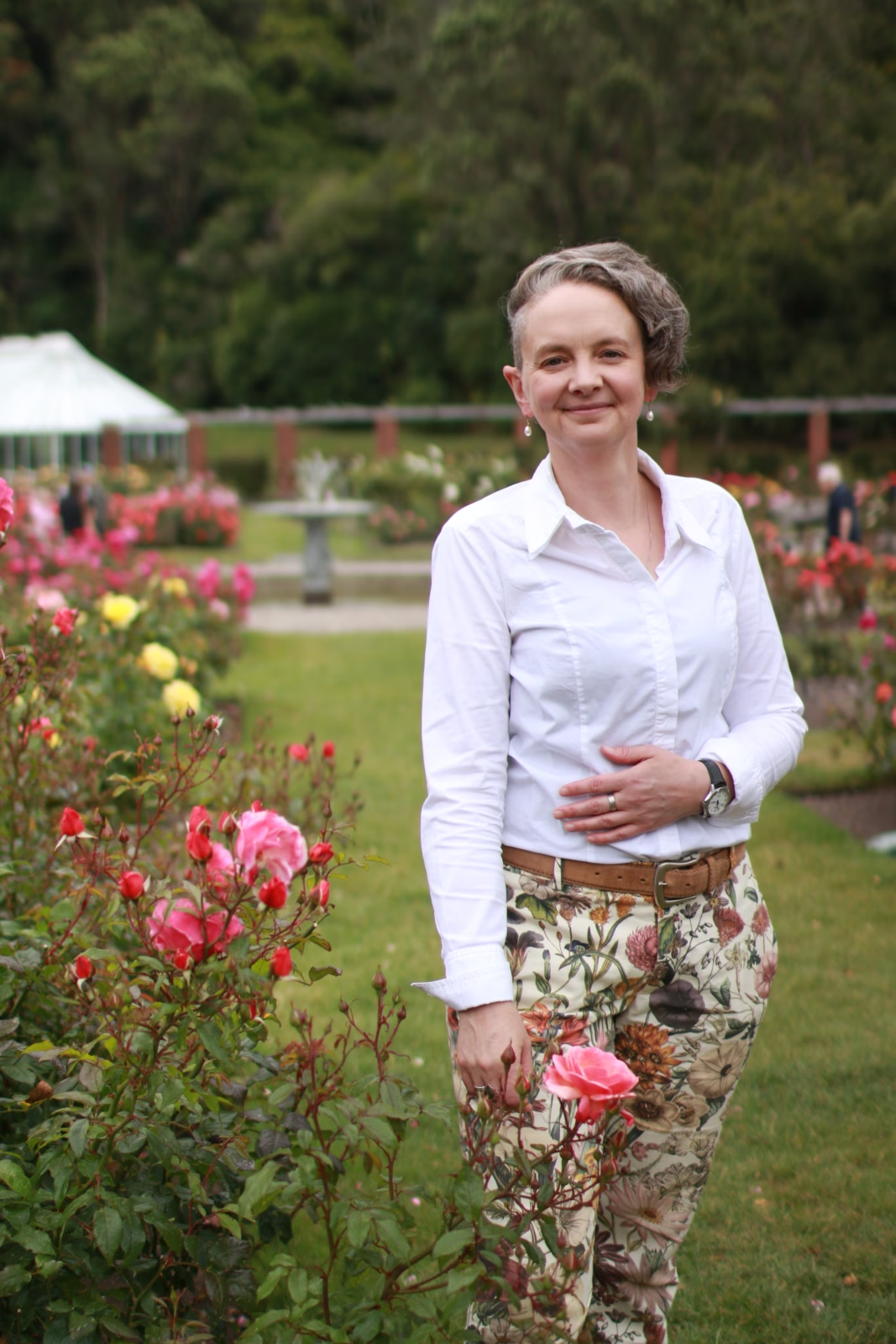
There aren’t any qualifications you must have to be a funeral director and there isn’t really any training you can do prior to starting in the role. You learn on the job, and the learning is partly “how it’s done” and partly “how we do it here”.
Living the Funeral Director dream
I’m lucky enough to have the particular disposition that suits the role, being comfortable in the company of the deceased and the bereaved. There are always new things to learn and I do wish I’d been able to find this job ten years earlier! But I’m so privileged to be here now and to have the opportunity to keep doing this work.
A lovely man once said to me, “You’ve been a light to guide me through the darkness.” That’s fulfilment. That’s the job.
And I love it.
View other resources

Matariki at Wellington City Funerals
A year ago at Matariki I was poised on a
What should a funeral look like?
“When I die, I want a Viking funeral…” Believe it

We Love Mercury: The Story Behind the Name of Our Hearse
Some names are chosen carefully. Others seem to arrive exactly
Karori seniors serving DRAMA
On Tuesdays at 10am till 11:30, a small group gathers

How do you feel about Mother’s Day?
ASPARAGUS! I hate it. Like, deeply, passionately, no-coming-back-from-it hate it.

NZ Music Month
The emotive joy of music Some memories don’t fade. You

Does Being Locally Owned Matter?
1997 was a pretty memorable year for me. It was

How did you get to be a Funeral Director, Stu?
Becoming a funeral director was the beginning of what would

No shame; no regrets – Pride in our funerals
The Pride Festival is on in Wellington. No matter where

Glossary: some common funeral-related words and what they mean
Do you pin a cortège on your lapel? If you

Can I get a memorial bench in Wellington?
Installing a seat, bench or picnic table in a public

Are you open on Public Holidays?
One of us is always available on the phone, any
Looking for some help? Get in touch
Enter your contact details here and we’ll be in touch as soon as we can. If someone has died, it’s best to call us: 04 399 1299.