
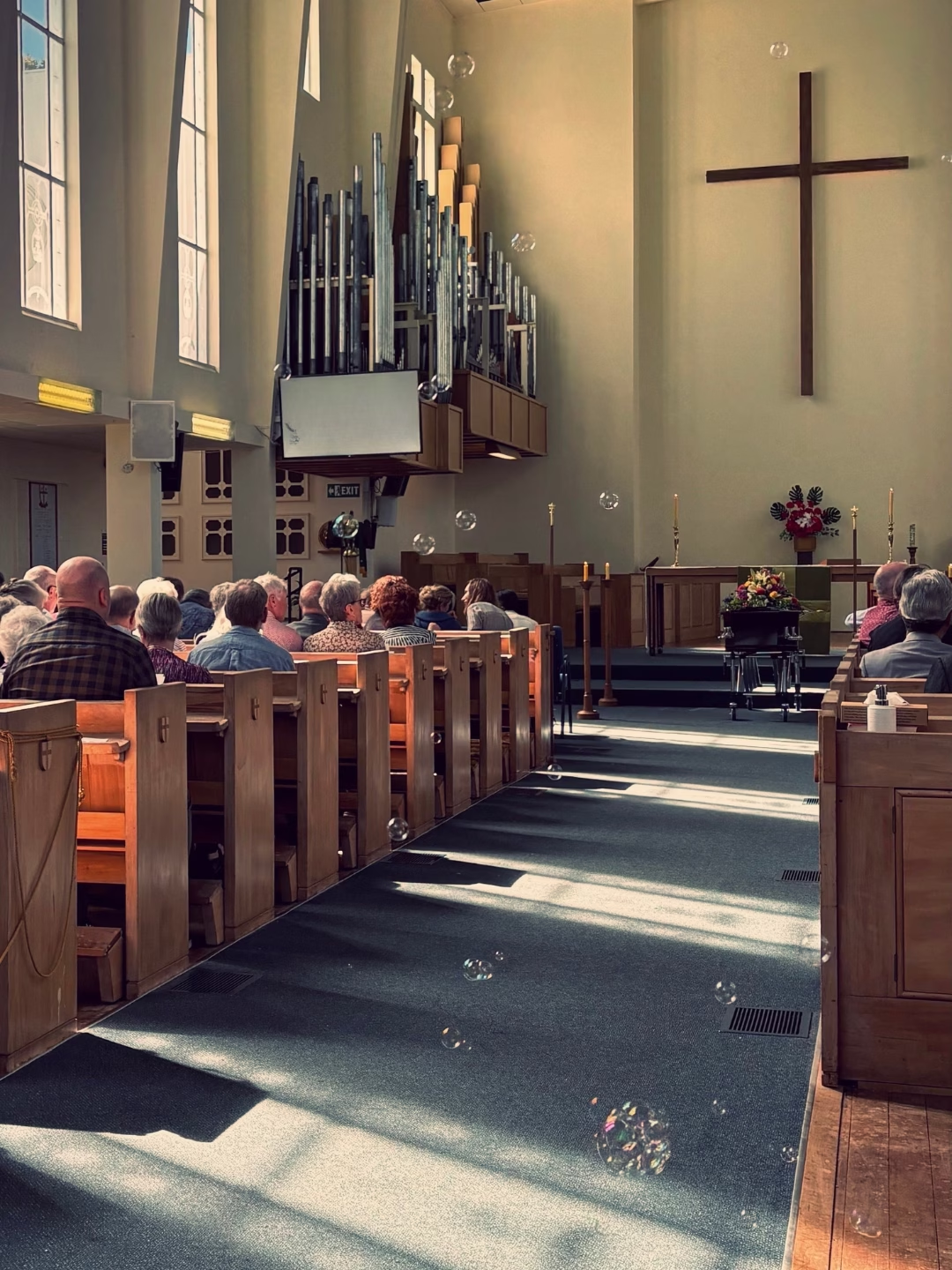
“When I die, I want a Viking funeral…”
Believe it or not, this is one of the most common things people say to me when they find out I’m a funeral director.
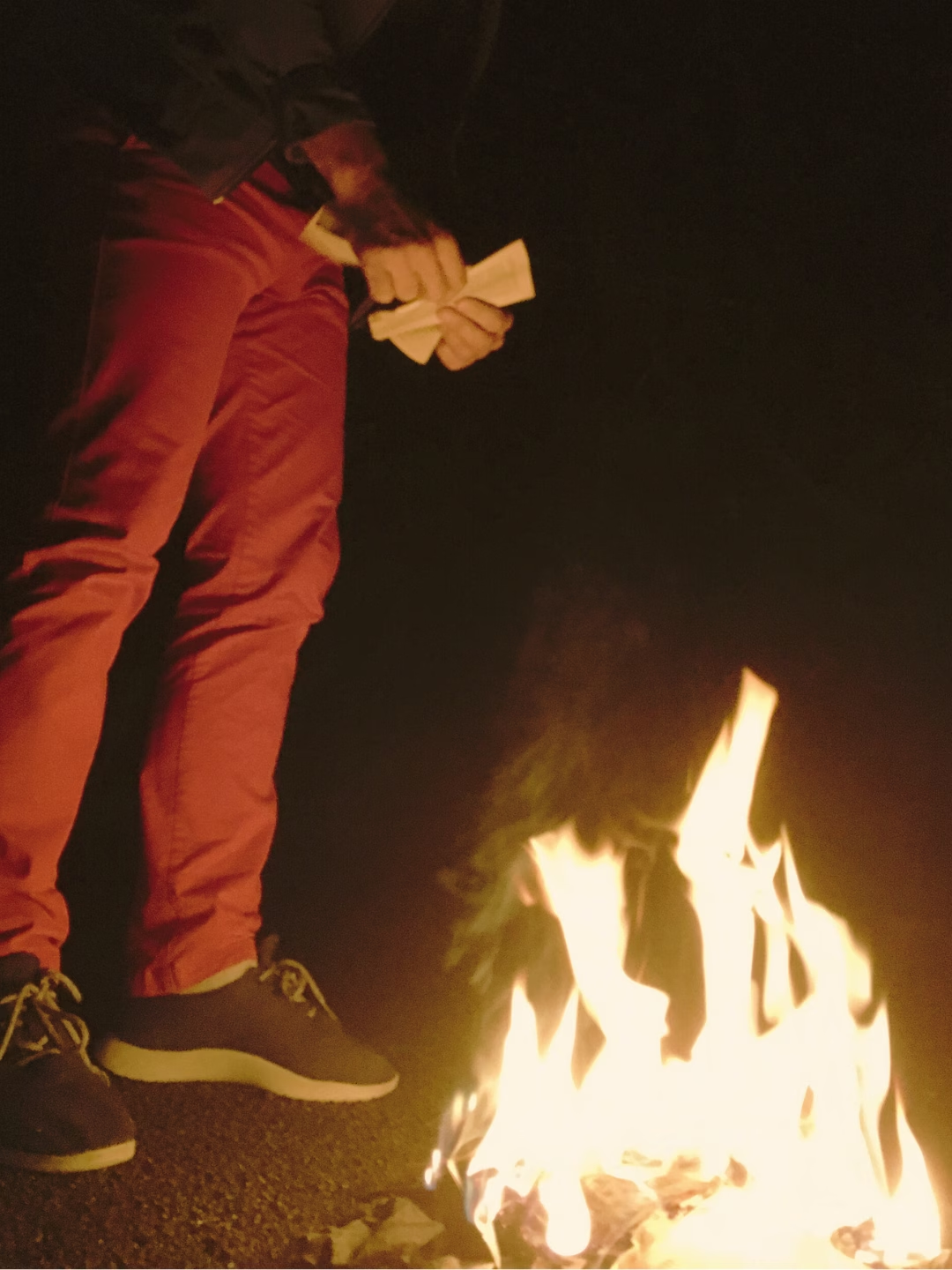
The idea usually goes something like this: a boat, stacked with wood and fuel, drifting out into Wellington Harbour… then a flaming arrow from shore—whoosh!—and everything goes up in flames. Dramatic, memorable… and, unfortunately, illegal in New Zealand.
That part tends to surprise people. What surprises them even more is that cremation on a funeral pyre is actually legal here (with the right permissions). Suddenly, the conversation gets a lot more interesting.
But jokes aside, these kinds of comments usually point to something deeper. For many people, the “traditional” funeral doesn’t quite feel like enough. There’s often a desire for something more meaningful, more personal—something that truly reflects the person who has died.
Why rituals matter
Before becoming a funeral director, I spent 10 years as a church minister. One thing became very clear to me: every culture and belief system has its own funeral traditions—but they all serve the same purpose. They help people grieve.
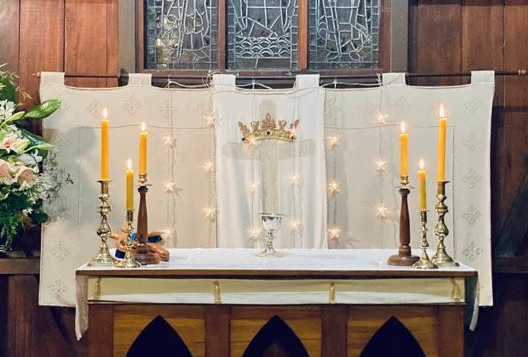
Take a Catholic Requiem Mass, for example. There’s something deeply comforting about its structure. Even people who haven’t been to church in decades often know exactly when to stand, sit, and respond. It creates a sense of connection—to each other, and to something bigger.
You’ll see the same thing across many cultures:
- Buddhist prayers before a service
- A Hindu family present at the moment of cremation
- Pasifika families gathering to share food and stories afterward
These rituals have been passed down through generations. They’re familiar, grounding, and comforting.
But what if tradition doesn’t feel like “you”?
For some of us, those traditions can feel a bit distant. As a fourth-generation Pākehā, my own family’s funeral customs come from a mix of evangelical Christianity and Victorian English traditions—neither of which feel especially close to home for me.
So it raises an important question:
Can we do something different?
There’s no one “right” way to say goodbye.
Most funerals follow a familiar format: a welcome, a eulogy, tributes, photo memories, a committal, and a final song as the casket is carried out.
And for many families, that works perfectly. It gives space to reflect, honour, and say goodbye.
But it’s not for everyone.
Some people choose not to have a service at all, often because they don’t like the idea of people standing up and speaking about them. But funerals aren’t really for the person who has died—they’re for the people left behind. They’re about helping friends and whānau process loss and support each other.
So what happens when we want something more personal—or even a bit unusual?
What “different” can look like
Over the years, I’ve seen some truly meaningful and unique farewells:
- A bottle opener attached to a casket, with close friends sharing one last beer together before carrying it out
- A floral arrangement made entirely of LEGO
- Guests writing messages directly onto the casket
- A letterbox built into the casket, so people could “post” letters to their loved one
- A handmade kayak used instead of a traditional casket
- Small, informal gatherings where people simply sit together and share stories
None of these were done for shock value. They were done because they reflected the person—and that’s what made them powerful.
Creating something meaningful
At Wellington City Funerals, Mary and I believe every farewell should feel personal, dignified, and meaningful for your whānau.
That might mean honouring long-held religious traditions. Or it might mean creating something entirely unique to your family.
By asking the right questions and taking the time to really think things through, we can help you create a farewell that truly fits—something that supports the grieving process and feels right for the people who matter most.
And while we might not be able to arrange a Viking boat and flaming arrow…
We can help you create something just as meaningful.
(Although I’m still waiting for someone to ask for a funeral pyre.)
View other resources

Matariki at Wellington City Funerals
A year ago at Matariki I was poised on a

We Love Mercury: The Story Behind the Name of Our Hearse
Some names are chosen carefully. Others seem to arrive exactly
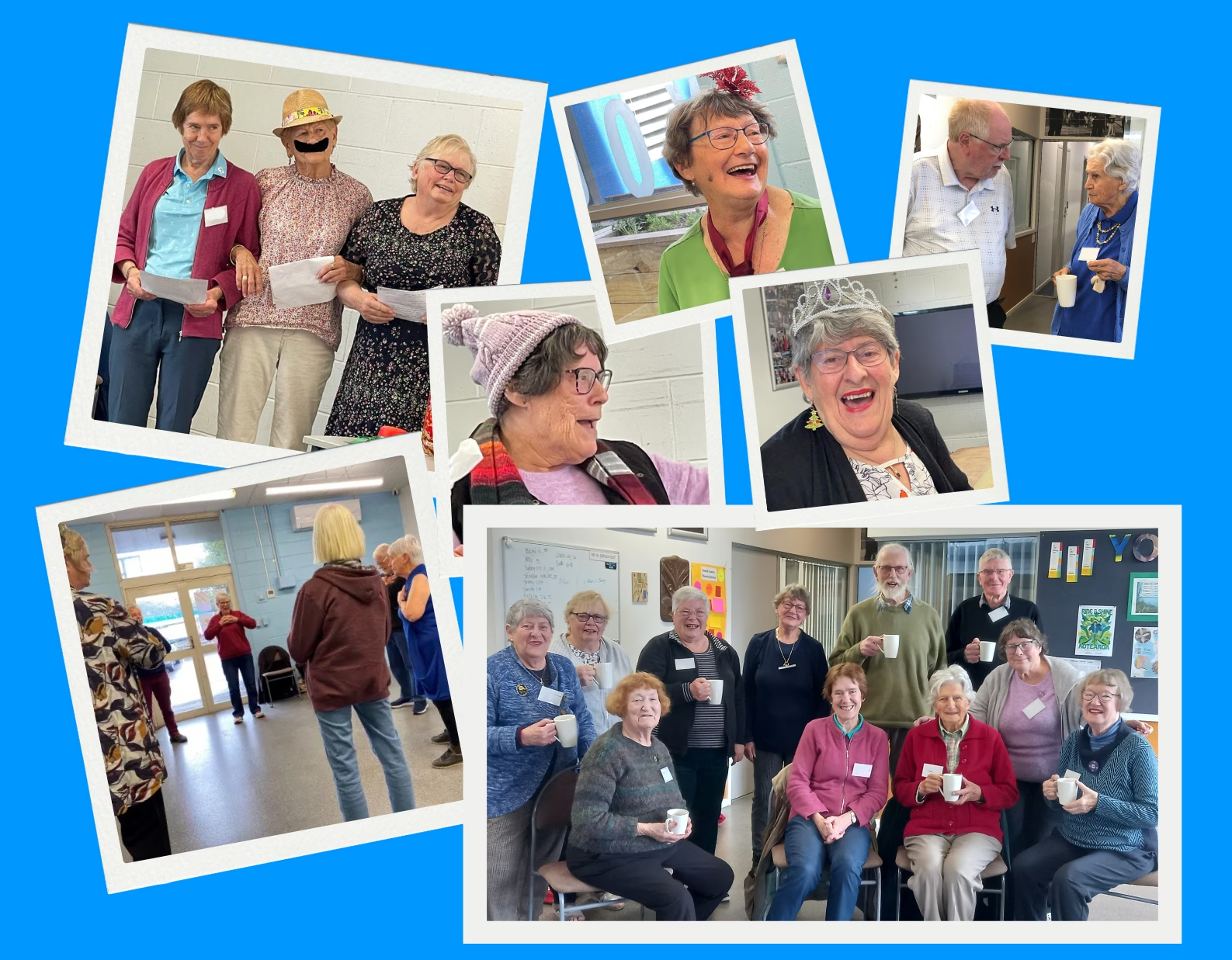
Karori seniors serving DRAMA
On Tuesdays at 10am till 11:30, a small group gathers

How did you get to be a Funeral Director, Mary?
I’ve spent most of my life unsure of what I

How do you feel about Mother’s Day?
ASPARAGUS! I hate it. Like, deeply, passionately, no-coming-back-from-it hate it.

NZ Music Month
The emotive joy of music Some memories don’t fade. You

Does Being Locally Owned Matter?
1997 was a pretty memorable year for me. It was

How did you get to be a Funeral Director, Stu?
Becoming a funeral director was the beginning of what would

No shame; no regrets – Pride in our funerals
The Pride Festival is on in Wellington. No matter where

Glossary: some common funeral-related words and what they mean
Do you pin a cortège on your lapel? If you

Can I get a memorial bench in Wellington?
Installing a seat, bench or picnic table in a public

Are you open on Public Holidays?
One of us is always available on the phone, any
Looking for some help? Get in touch
Enter your contact details here and we’ll be in touch as soon as we can. If someone has died, it’s best to call us: 04 399 1299.