
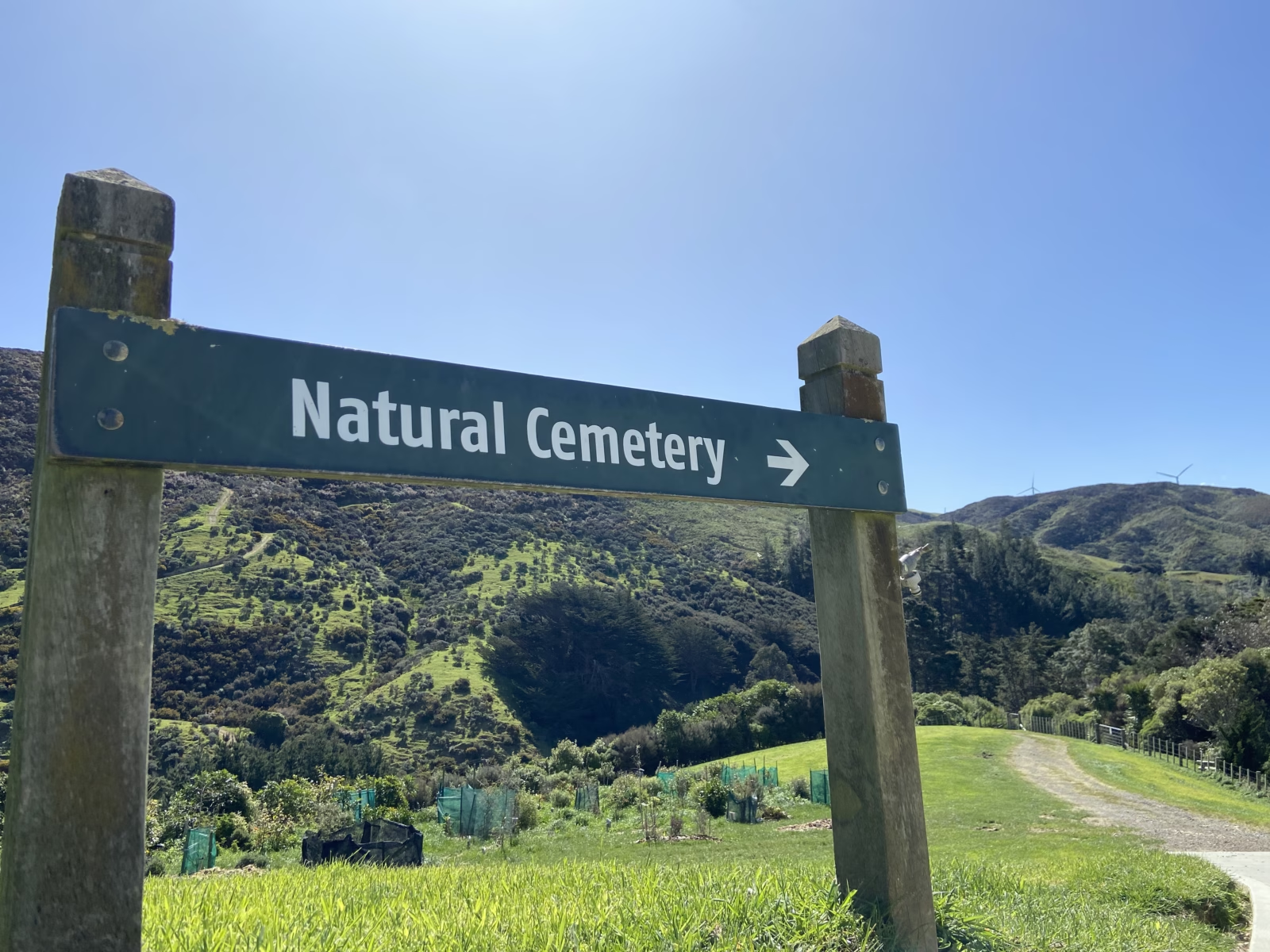
“What’s a natural burial? As opposed to all the rest of this?!”
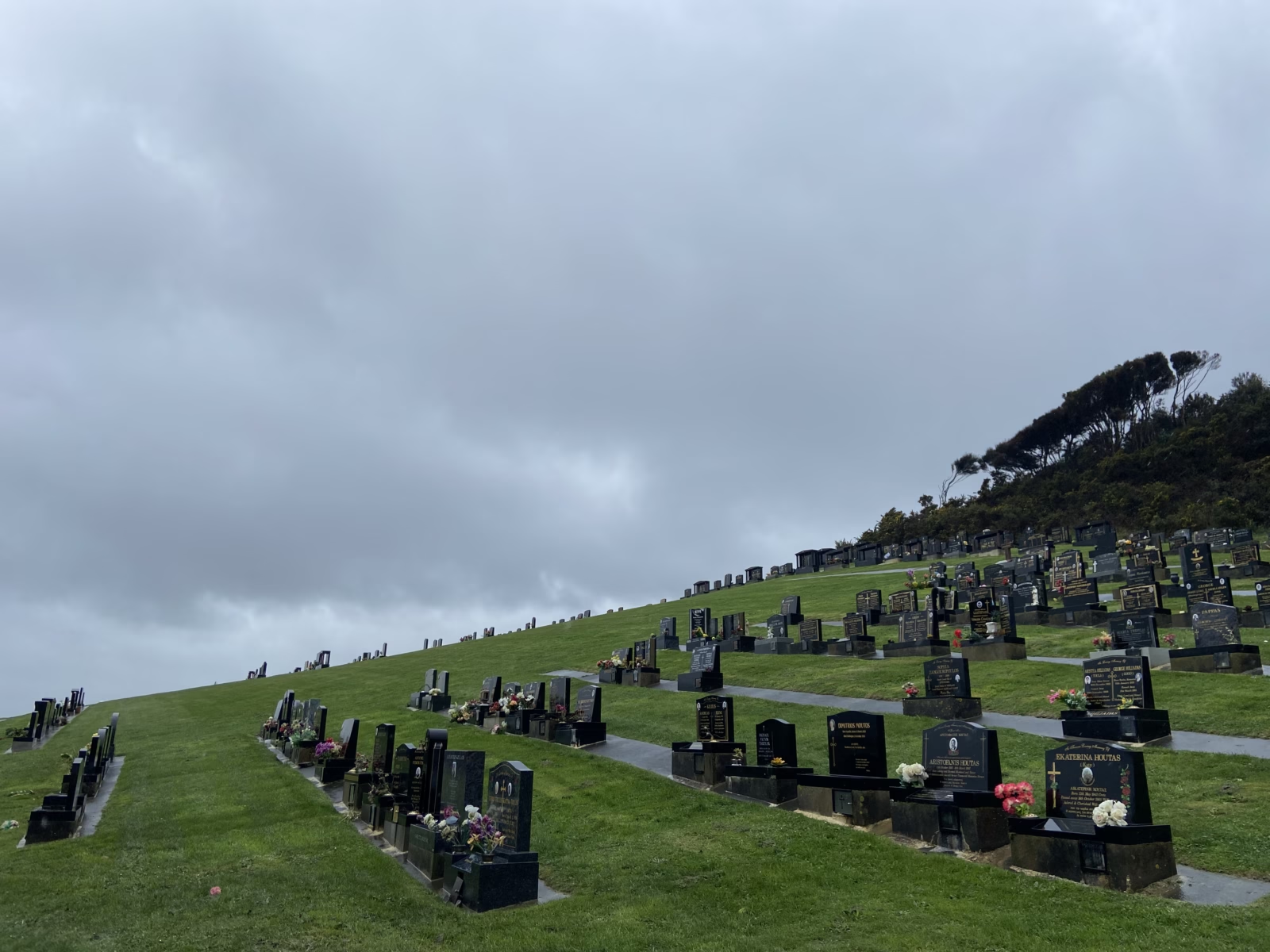
We were standing in Makara Cemetery, surrounded by greenery, birdsong, the fresh wind, the marbled grey skies, and a small team of people were “backfilling” (filling in the plot) at the end of a burial. The person who asked me was making a fair point. It feels very natural out at Makara. So what makes the Natural Burial Ground different from the rest of the cemetery?
Earth to earth
Natural Burials return the body to the earth in nature’s own way. That means allowing conditions for speedy decomposition, and regeneration of a natural forest above the graves. ~ Natural Burials NZ
Natural Burials NZ is a not-for-profit organisation formed in 1999. Their purpose is to create and operate natural burial cemeteries.
What is a natural burial? ~ Natural Burials NZ
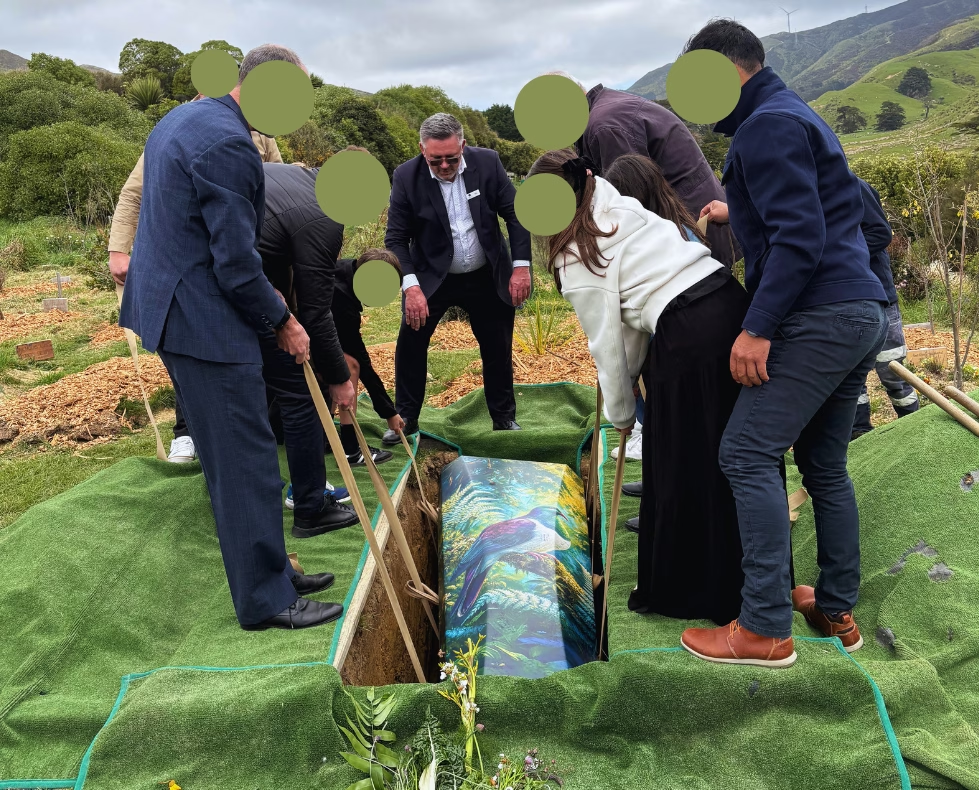
In natural burial, we avoid introducing anything to the cemetery which would interfere with, or pollute, environmental processes. Plots are shallow, at a depth within the active soil layer, the deceased are not embalmed, dressed in natural fibres and buried in coffins of untreated sustainable wood.
We have a beautiful selection of caskets that are suitable for natural burial. Instead of the usual plastic lining, we use a biodegradable liner and natural fabric linens for trimming.
There are 12 certified natural burial grounds around New Zealand. The nearest one to Wellington City is at Makara, which is a public cemetery managed by Wellington City Council.
How to find the Natural Burial Ground
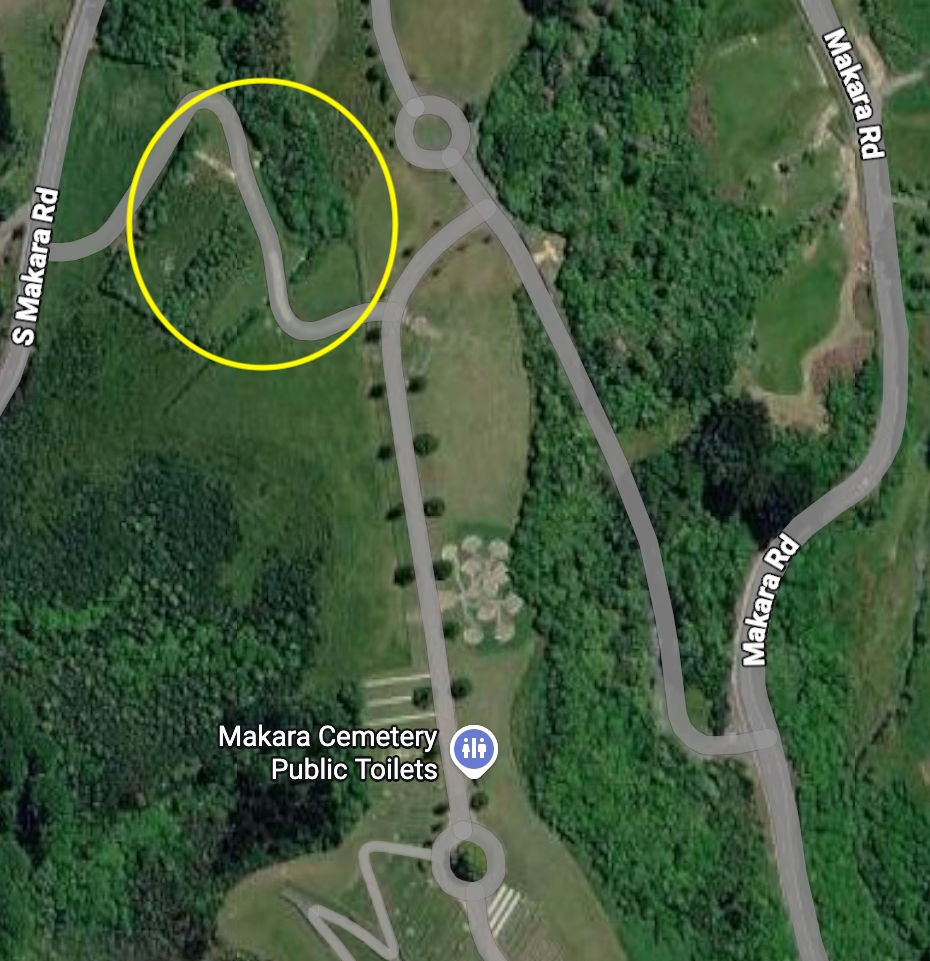
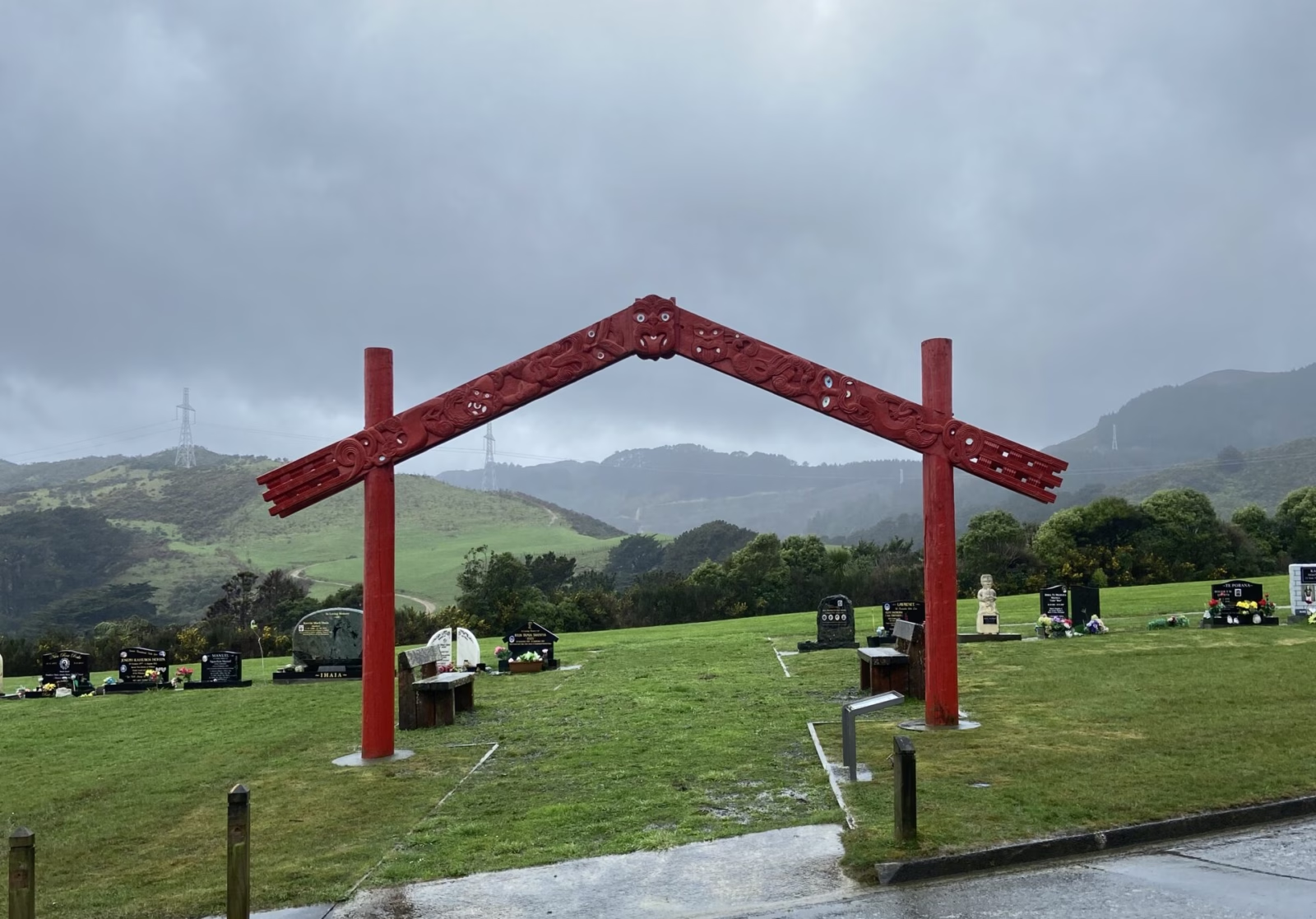
Entering Makara Cemetery through the main stone gates off Makara Road, follow the road up the hill and at the top, turn left. On your left you’ll see the red gate of the urupā. Directly across from that, on your right, you’ll see farm fencing and a gate. That’s the gate to the natural burial ground.
There is signage of course, but the urupā gateway is the most obvious landmark and if you’re on the lookout for that, you won’t overshoot and find yourself in Roman Catholic 1. (Though that is where you’ll find the wharepaku and a roundabout that makes turning your vehicle nice and easy.)
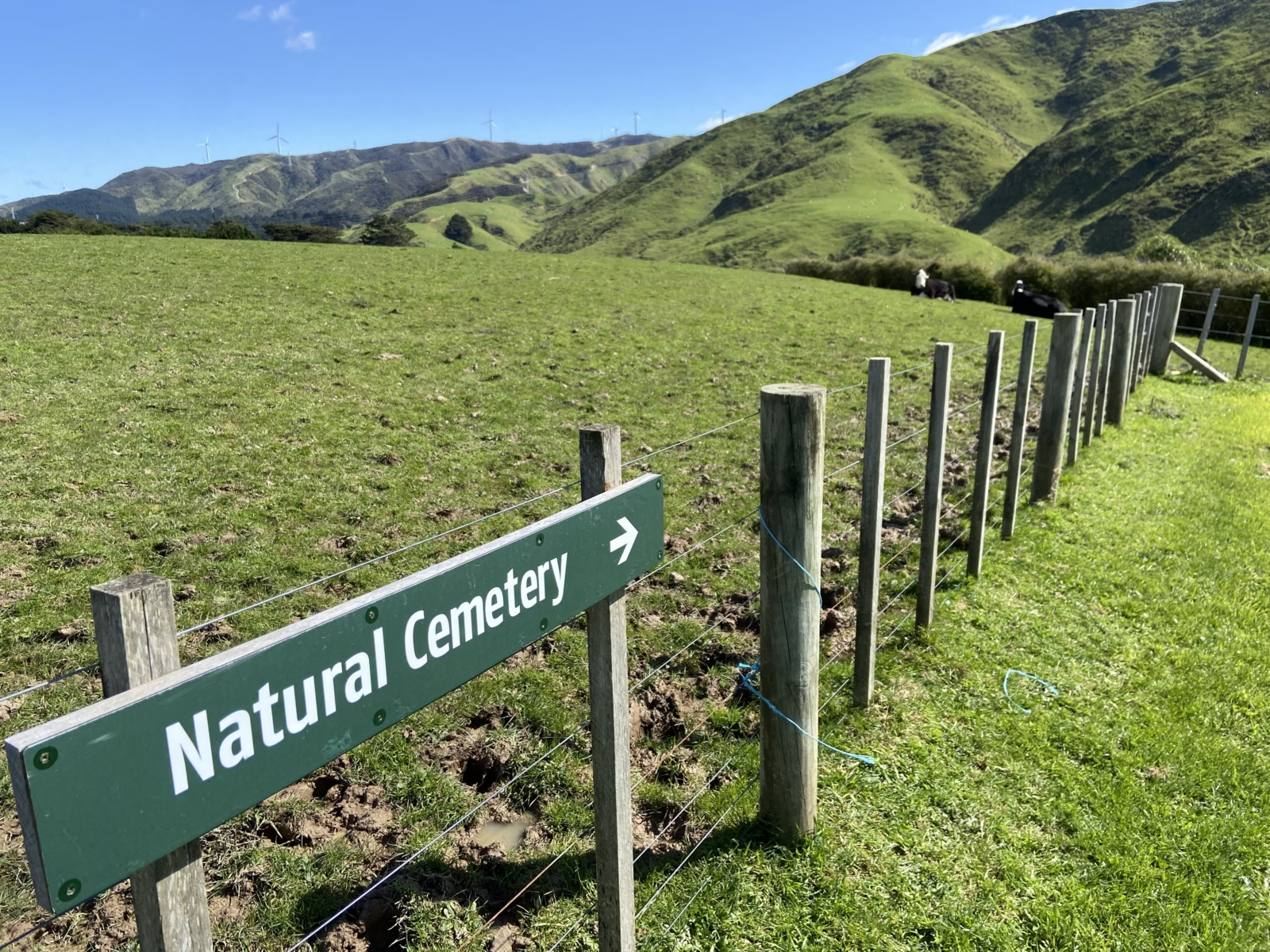
Through the farm gate, you’ll find a bit of a paddock. That’s the best place to park your vehicle. The road follows the curve of the hill in a steep swoop which is now partially paved but becomes off-road. If you’re in a 4WD you’ll be fine. With other vehicles you may well be fine, especially if the weather’s been mild and the grass has been cut recently so you can see the tracks to follow, but there is also a chance of getting stuck. Also, once you’ve committed to driving down the track, you’ll need to continue all the way down to the exit gate to South Makara Road. There’s no driving back up the hill, folks.
If you’re on foot, you’ll need to be in sensible shoes and would ideally have reasonably good mobility. That said, if there’s someone in the family who needs either a lift down the hill or assistance with walking down, we can help.
Pros and cons of natural burial
As with any choice of final resting place, there are pros and cons. Natural burial will be the right choice for some, and not for others. Here are some things to consider.
Abiding by the rules
In order to reach its environmental goals, the natural burial ground has rules that have to be followed.
- We can’t go ahead with a natural burial if the deceased has been embalmed
- The deceased needs to be dressed in natural-style clothing – no sequins, no polyester, you get the picture
- We can’t bury ashes, either human or animal
- We also can’t bury other meaningful items like a bottle of whisky, foil-wrapped chocolate or suchlike
- The casket must meet natural certification requirements, which restricts your choice and also means a home-made casket has to be signed off by Natural Burials NZ as well as the Cemetery office.
These rules aren’t usually a problem. Most families understand that an eco-conscious funeral means returning to the earth much the same way as we came in. People who want to have a natural burial are usually keen to ensure they return to Papatuānuku as naturally as possible. Then again, there are plenty of mementos that are made of natural materials and can be buried with no problem at all.
If you’re uncertain about what might or might not be allowed in a natural burial, just give us a call.
Access
The intention of natural burial is to eventually return the burial ground to native bush. This does mean that, as the native plantings grow up and flourish, it becomes difficult or impossible to find the exact location of a person’s burial plot.
A work-around would be to drop a pin on Maps, or to find the plot on What3Words.
What3words is a geocoding system that divides the world (yes, the entire world) into a grid, assigning a unique three-word “address” to each square in the grid. The system makes it easy to identify precise locations, regardless of how plantings, town planning or address changes might affect the surroundings. The app works offline, which is key in a place like Makara where coverage isn’t reliable.
The likelihood is that, after a few years, it won’t be possible to physically get to the same spot where a loved one is buried.
It could be worth considering a memorial elsewhere, to give you somewhere to go and feel connected to your loved one – read more in “How do I get a memorial bench in Wellington?”
Cost
Natural burial is one of the costlier options currently available in Wellington. As at April 2026, burial in the adult plaque lawn at Makara costs $2,931.00, compared with $3,536.00 for a natural burial. (See more details and up-to-date fees on the WCC website.)
Next cab off the rank
In natural burial there can be only one person per plot, and plots can’t be reserved. In other areas of the cemetery we can book to have up to three caskets interred in a single plot, and can reserve the plot next door if a couple or family wants to be interred side-by-side. However, in the natural burial ground the plot next door might not be accessible once it comes time to use it.
For the same reason, it isn’t possible to choose a particular plot. Whichever plot is free next will be the one we use.
Natural is as natural does
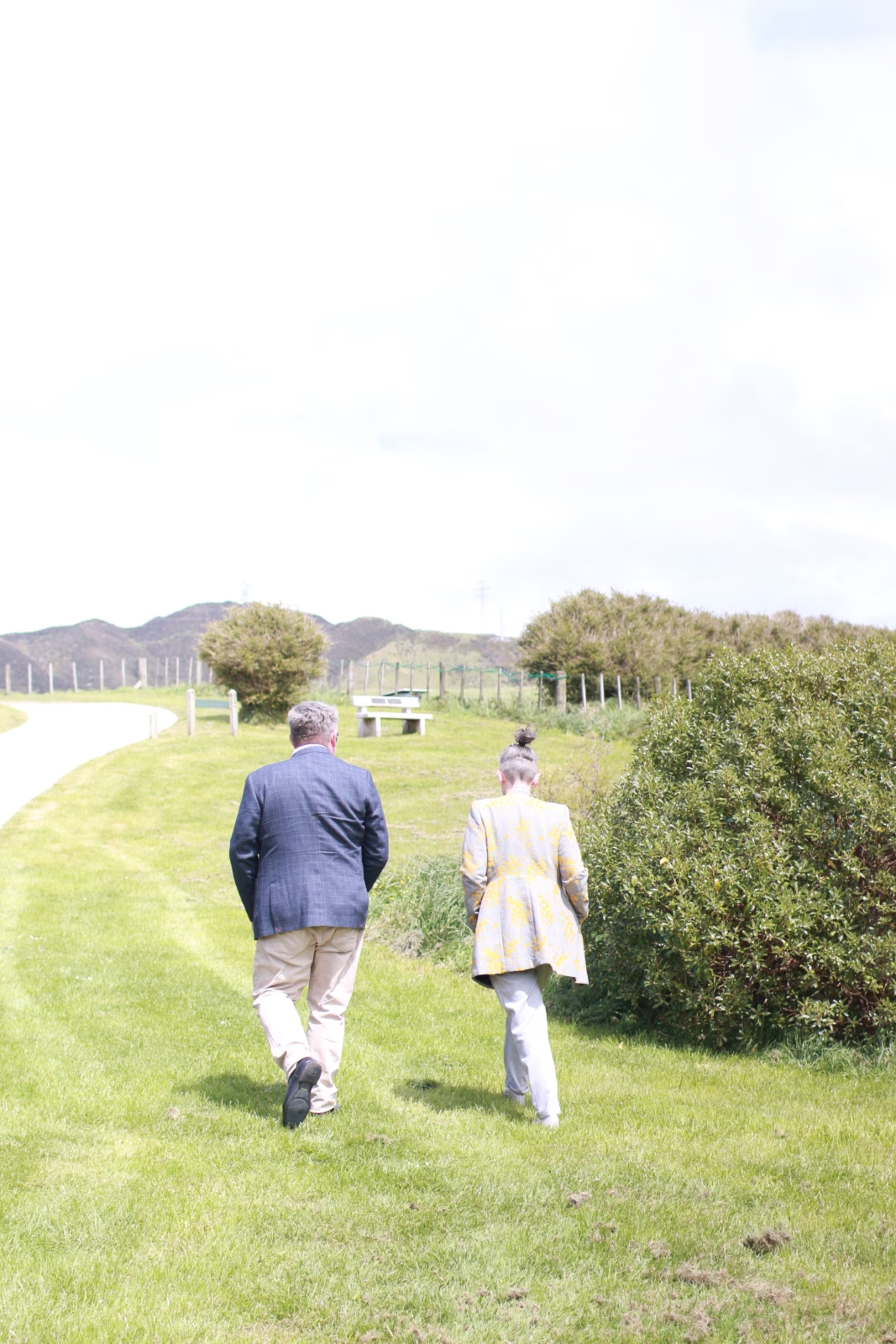
Remember, the natural burial ground isn’t the only place you can be buried in a natural fashion! We can meet many of the same eco-friendly considerations for a burial in a Public or Denominational plot at the cemetery which remains accessible and can have a headstone placed there, or can be shared with other family members.
As in life, in death we sometimes have to make compromises and find the best outcome possible in our current circumstances.
View other resources
Halloween and how we reach across the void
Halloween’s a tricky time for a funeral director. There’s a

How do I place a newspaper notice?
“I’ll need a Death Certificate, won’t I?” We’ve been hearing

Matariki at Wellington City Funerals
A year ago at Matariki I was poised on a
What should a funeral look like?
“When I die, I want a Viking funeral…” Believe it

We Love Mercury: The Story Behind the Name of Our Hearse
Some names are chosen carefully. Others seem to arrive exactly
Karori seniors serving DRAMA
On Tuesdays at 10am till 11:30, a small group gathers

How did you get to be a Funeral Director, Mary?
I’ve spent most of my life unsure of what I

How do you feel about Mother’s Day?
ASPARAGUS! I hate it. Like, deeply, passionately, no-coming-back-from-it hate it.

NZ Music Month
The emotive joy of music Some memories don’t fade. You

Does Being Locally Owned Matter?
1997 was a pretty memorable year for me. It was

How did you get to be a Funeral Director, Stu?
Becoming a funeral director was the beginning of what would

No shame; no regrets – Pride in our funerals
The Pride Festival is on in Wellington. No matter where
Looking for some help? Get in touch
Enter your contact details here and we’ll be in touch as soon as we can. If someone has died, it’s best to call us: 04 399 1299.